
How to Keep Up with the News while Drowning
by Felicia Wu Song

Is it possible to engage with world news while treating one’s own nerves with gentleness? Felicia Wu Song suggests a fresh way forward.
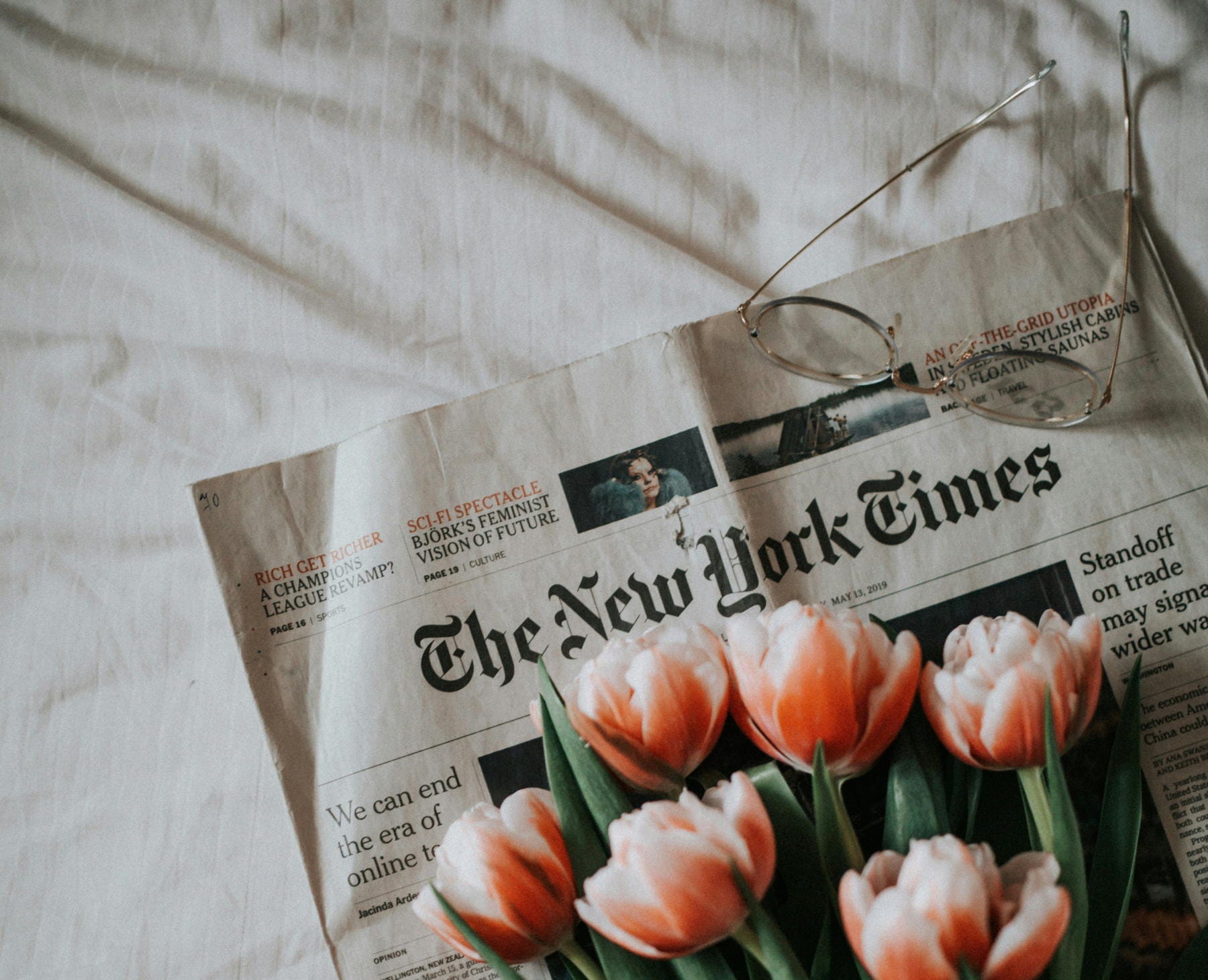
Last August, I signed up for the free “Breaking News” email service from The New York Times. I was depleted after a long hard season and had fallen away from keeping up with the news. Signing up to have the most important news delivered straight into my inbox seemed like a low-impact way to be a good citizen and stay abreast of the political events running up to the 2024 election. But after five months, “Breaking News” didn’t so much break my brain (as the saying goes about the deleterious effects of the Internet), but it completely shredded my nervous system.
When I checked my email, my cortisol levels would spike whenever I saw the “Breaking News” subject line. Instead of feeling informed, I felt psychically assaulted by the random clanging of an emergency alarm:
Alert! Alert! Pay attention! DO SOMETHING!
As each breaking news rattled my already jangled nerves, it became clear that I needed to unsubscribe. My attempt to stare into the blazing sun of contemporary affairs through a make-shift pinhole had utterly failed. I needed to crawl back under my proverbial rock and seal myself off from the unpredictable shocks of the news.
As an academic and a parent, I feel embarrassed to admit that I don’t regularly keep up with the news anymore. Before the pandemic, I still had a decent appetite for the spirit-sharpening qualities of news consumption. In fact, I was the type of person who asked for my birthday to have an annual print subscription of The New York Times delivered to my home. I’d grown up in a family who finished dinner over the last ten minutes of the local news TV broadcast and then faithfully watched Frank Reynolds anchor ABC World News Tonight. My parents and public school teachers mutually reinforced the felt sense that to be an educated person and responsible citizen, we ought to be informed about the current events and social issues of our day.
Having taught in higher education for over twenty years, I’d assumed the mantle of inculcating this norm to my next-generation students: keeping up with the news—local, national, and global—is important. Being informed is important as a citizen in a democracy that grants us voice through our vote. Being informed is important as a consumer in a capitalist society that gives us power through our dollar. Being informed is also good for cultivating a healthy and humble perspective about our place in the world relative to those who are unfamiliar to us.
I believed this for a long time. I think I still believe.
But I’ve begun to wonder if all this character-building and democratic muscle-building through the news was feasible only in the long-gone world of my childhood where we got a dose of the news only once or twice a day. Before cable networks normalized 24/7 news cycles, the world was one where the moment you turned off the TV, silenced the radio, or refolded the newspaper, it was done. You went on with your day, left with only your thoughts and a possible news-related conversation at the water cooler or backyard fence.
Today, however, our news landscape is structured to seep into every crevice of our lived experience through our digital devices — showing up on our social media feeds, our emails, and non-stop on our televisions. News stories are blasted out ceaselessly, no longer articles written about events after the fact. Rather, the news today is a telegraphic ticker-tape constantly transmitting bits and pieces of happenings as they unfold and evolve. The frenetic quality of news production, competing for industry relevance, has come to characterize our news consumption as we doomscroll late into the night. This constant exposure to what is often a toxic flow of clickbait news stories sways our perceptions of the world, showing us an ever more violent and dangerous one. And this is to say nothing about the contemporary quandaries of misinformation, partisan news, and algorithm-driven news silos that diminish our trust in our news sources, our institutions, and each other.
Many of us are all in knots over the “whole news thing.” As teachers, citizens, and people trying to faithfully engage the world as a way of following Jesus, we continue to trust that news consumption can surely be informative, helpful, and motivating despite how toxic and unsustainable the new media environment has become. For some of us who have been personally or proximately damaged by what’s happening in the larger world, we grit our teeth and keep keeping up with the news — even when it feels like putting a hand on a hot stove when we’re already covered in blisters. Why? Because we feel in our conscience that we must keep up with the news. It is our one way of conferring dignity to those who are being harmed, silenced, or overlooked through violence, injustice, or abuses of power. It feels irresponsible and morally callous to not keep up with what is happening when so many people are suffering.
In these ways, keeping up with the news today has become the modern hair shirt worn against our skin as an act of asceticism, reminding us of the suffering of others. It functions as self-mortification that helps us recognize our privileges, our fears, our longing for security, and our desire for control. As such, we “wear” the news each day, layering new laments over previously unresolved laments. In our felt powerlessness in today’s world, the least we can do is keep up with the news, right? It feels like a moral good that we should wear even when it grinds us down, chafing against our weary souls.
Is News Consumption Morally Neutral?
The first time I flipped through the table of contents of KC Davis’s How to Keep House while Drowning: A Gentle Approach to Cleaning and Organizing, I knew this was not the usual homemaker’s book of advice:
Chapter 1: care tasks are morally neutral
Chapter 3: for all the self-help rejects
Chapter 5: gentle self-talk: mess has no inherent meaning
As someone who feels guilty for not having a perpetually clean kitchen and, even worse, not succeeded in training my kids to make their beds, Davis’s chapter titles alone were a revelation. I have always lived with the cleanliness of my house as a measure of my character, so could “care tasks” — what Davis names the everyday practices of cleaning and organizing — really be morally neutral?
In chapter 1, she writes: “When you view care tasks as moral, the motivation for completing them is often shame….If you are completing care tasks from a motivation of shame, you are probably relaxing in shame too—because care tasks never end and you view rest as a reward for good boys and girls. So if you ever actually let yourself sit down and rest, you’re thinking, ‘I don’t deserve to do this. There is more to do.’”
This woman so has my number. This is my inner life in a nutshell.
For Davis, while care tasks have necessary function (like maintaining sanitation and health), and might even be ennobling when we can delight in creating beauty and order in our living spaces, we need to recognize that there will be seasons when the house won’t be sparkly and camera-ready. Depending on the day, maybe we only manage to gather the dishes to the sink without actually doing them. And on the days when we come home and can barely keep from crying, Davis says it’s okay to just get in your jammies, go to sleep early, and try getting those dishes to the sink tomorrow.
Is this really allowed? Or is she just giving me permission to be lazy and weak? Wait, where’s my hair shirt?
Davis’s “gentle approach” to self is premised on accepting that I’ve been drowning. I’ll be the first to say that this does not naturally resonate. Me? Drowning? My first thought is: I’m fine. I have it way better than so many others in the world. I have no right to complain. My second thought is more defiant: I. Don’t. Drown. All my life, I have willed myself to push past my fears and fatigue in order to earn my degrees, lecture in front of large classrooms, finish manuscripts, and lead difficult meetings. I know how to push myself and get things done. But these last few years, my body has kept the score and, as it falls apart in its creative and humbling ways, I’m slowly realizing that maybe I’m not so fine. Maybe I’ve actually been drowning and I just didn’t know it.
So. Is it possible that keeping up with the news is a lot like Davis’s care tasks?
Maybe keeping up with the news is morally neutral. Indeed, is there anything inherently good or godly in always being on the jump about the latest development anywhere and anytime according to the whims of today’s digital news environment? Perhaps it’s helpful to distinguish between this kind of “keeping up” in order to be “in the know” and being informed in order to develop a viable path for wisely acting and materially caring as a citizen and neighbor.
In this way, maybe being informed can come not through daily doomscrolling or random email news alerts, but through long-form journalism found in magazines or podcasts. Maybe being informed also comes through focusing on local or state-level contexts where most of us can actually influence change and participate in civic action that impacts our community. In fact, maybe only a few thimbles of news every couple days would help us become people who have more presence and bandwidth to give to our neighbors. And finally, for those of us needing to do the deep work of calming our overextended nervous systems, maybe we need to accept that we’ve been drowning, let go of our modern hair shirt, and let ourselves be cradled and consoled for a season by the tender presence of Jesus, the only One who can and does carry the weight and sorrows of the world.
Guidelines for Gentle News Consumption
For those of us who are worn out, exhausted, and even traumatized by how national and global developments have materially impacted the lives of people we love and perhaps even ourselves, here are some practical tips to consider for guiding your news consumption.
1. Set Intentions: If we were to go through life knowing that we will be doused by a random bucket of cold water at any time, wouldn’t we opt out? Sure, on those hot summer days, we might welcome such relief, but most of the time we would be shocked and irritated. So, why not resist the tendency to “just take a peek” at the news? While there will be occasions when we are glad to have learned of an event in a timely fashion, most of the time we are subject to news stories that set us back on our heels and leave us reeling. So, just as with any other discipline, set your intention, establish a routine for when and how you will engage the news, and try your best to stick to it.
2. Keep it Short: “10/10 WINS. You give us 10 minutes. We’ll give you the world.” This was the slogan I heard as a child when our family drove to Friday night Bible Study at church. The slogan ran at the top of the hour for a ten-minute news round-up on AM radio. It was quick, it was on-the-go, it was done. Find a news digest that summarizes the major categories of news you wish to engage and get on with your life.
3. With Sugar on Top: The only times I genuinely enjoy keeping up with the news is when my teenaged son and I watch a satiric news monologue from a late-night show host or listen to the NPR news game show “Wait, Wait, Don’t Tell Me” together. Whether it be after a long day or during a long drive, having funny people tell us what’s happening in the world often softens the edges of an otherwise harsh world. And getting to enjoy some chuckles with a loved one is a major plus!
4. From a Different Land: Listening to reports about American news through news media outlets from a different country is itself an education. For a while, I listened to the BBC’s daily news brief podcast while I prepared dinner. To receive a non-American perspective about not only the US but the world at large is an effective way to experience some healthy distance and detachment that grounds us.
5. Accept the boundaries you need: KC Davis’s chapter 15 is titled “you can’t save the rain forest if you’re depressed.” She has a point there. If you already feel like every day is a battle, it’s essential to come to terms with that reality and not overextend yourself. As human beings, we are made finite creatures intended for trust and dependence in God. This truth calls us to establish appropriate boundaries that Prentice Hemphill masterfully describes as “the distance at which I can love myself and you simultaneously.” Give yourself permission to discern how much energy and emotions you can realistically extend to being informed about the world and accept the distance you need this day to humbly love yourself and your neighbor simultaneously.
Photo by Taisiia Stupak on Unsplash
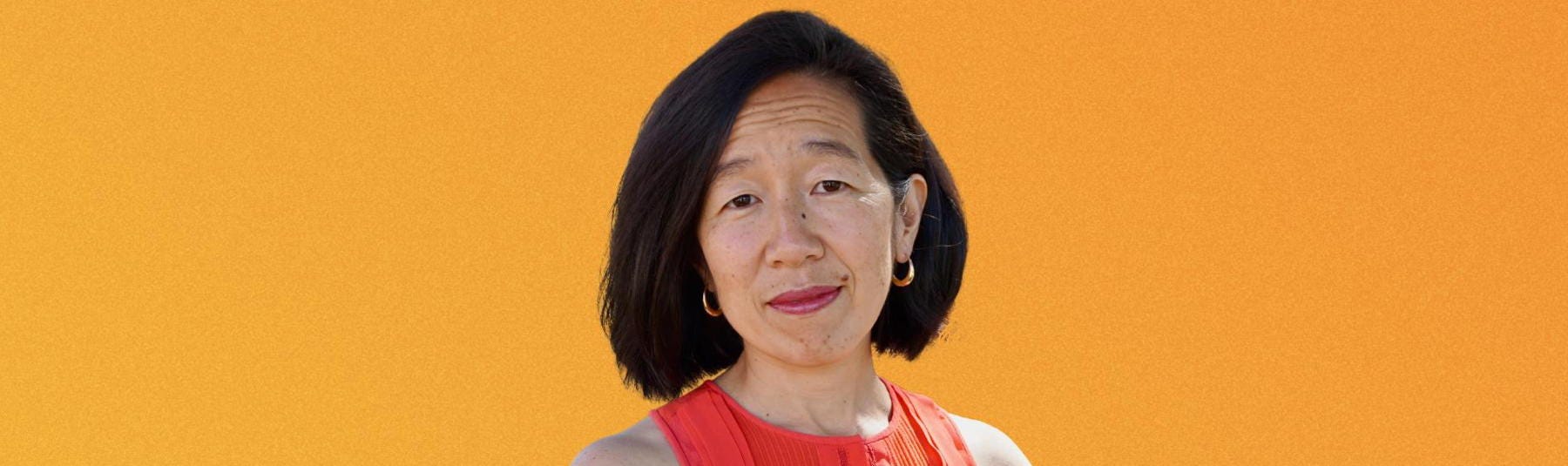
Felicia Wu Song (PhD, University of Virginia) is a sociologist and author of Restless Devices: Recovering Personhood, Presence and Place in the Digital Age and Virtual Communities: Bowling Alone, Online Together. With almost twenty years’ experience as a professor at Louisiana State University and Westmont College, she combines her training in history, communication studies, and sociology with a personal interest in theology to speak and teach on matters of spiritual formation and well-being in a digitally-saturated society. She currently works for the Center for Asian American Christianity at Princeton Theological Seminary as their new managing editor. Living outside Portland OR, she enjoys a good food truck with her husband and two teenaged children. For her latest activities, see feliciawusong.com.